Follow Us on:

Amax Healthcare Logo
Ankle MRI Explained, What It Shows, Why You May Need It, and What It Costs

Ankle MRI Explained: What It Shows, Why You May Need It, and  Cost

Ankle pain, swelling, or repeated sprains should not be ignored because ligament injuries, cartilage damage, or small bone fractures may worsen without clear signs on routine scans. An ankle MRI allows doctors to see detailed images of the joint and surrounding tissues, helping identify the exact cause of persistent pain or instability. Understanding how the scan works, what it reveals, and what it costs can help patients make informed decisions about diagnosis and treatment.

What an Ankle MRI Shows

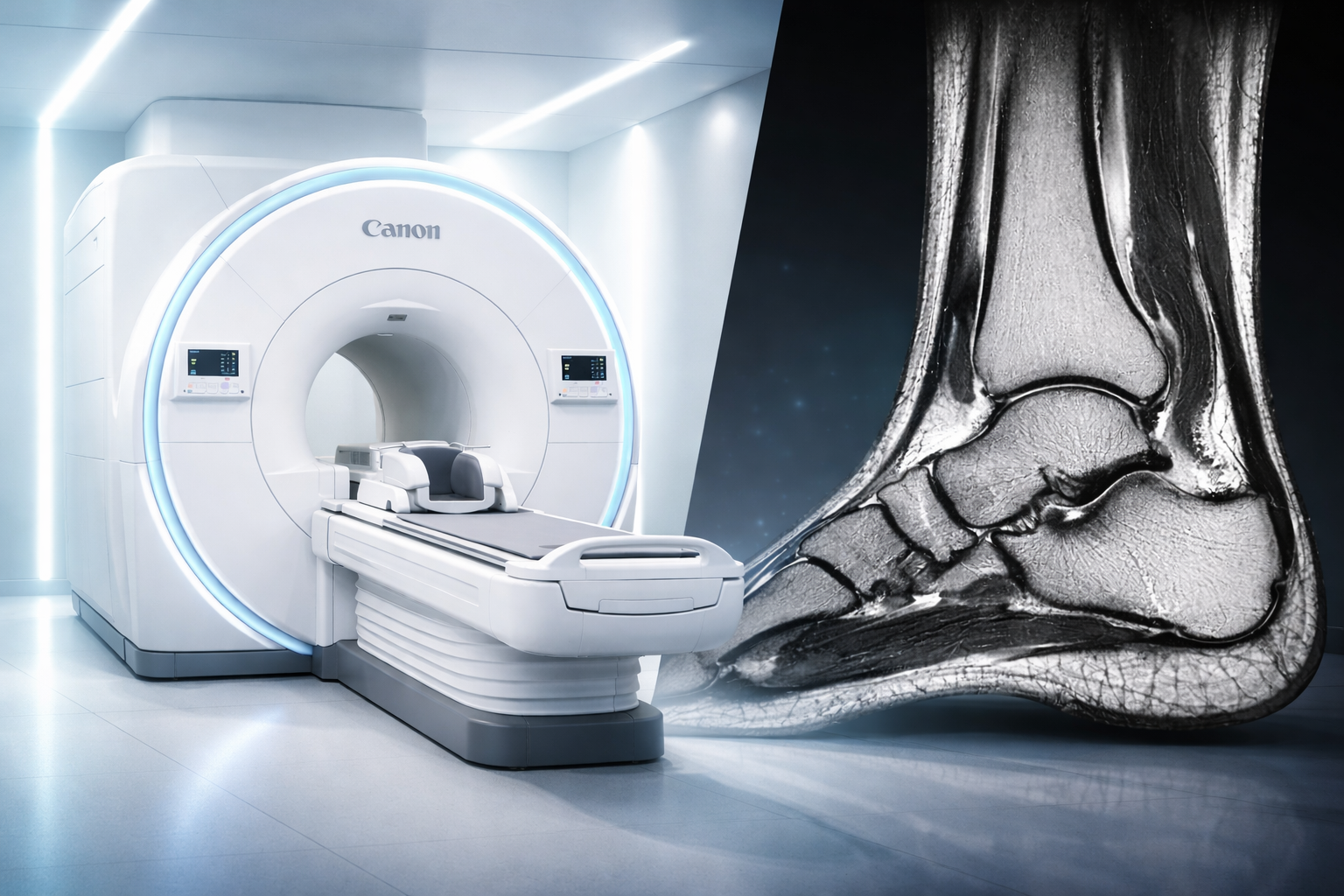
An ankle MRI is an advanced imaging test that uses strong magnetic fields and radio waves to produce detailed images of the ankle joint. Unlike X rays or CT scans, MRI does not use radiation and can clearly show both bone and soft tissues.

The scan allows doctors to examine several important structures inside the ankle.

.Joint surfaces and alignment of the ankle bones
• Articular cartilage that protects the joint
• Stabilizing ligaments around the ankle
• Tendons that control foot movement
• Bone marrow and subtle fractures

Because MRI shows both bone and soft tissue structures, it provides a comprehensive view of the ankle. Doctors often recommend the scan when symptoms continue despite rest, medication, or physiotherapy.

Why Doctors Recommend an Ankle MRI

Doctors may order an ankle MRI when symptoms persist after an injury or when routine scans do not explain ongoing pain. MRI helps confirm the exact cause of ankle problems and guides the most appropriate treatment plan.

Common medical reasons for an ankle MRI include the following.

Ligament injuries

Ankle sprains can stretch or tear the ligaments that stabilize the joint. MRI can identify partial tears, complete ruptures, and ligament inflammation. The scan also helps doctors evaluate healing in patients who experience repeated sprains.

Tendon problems

Tendons around the ankle may become inflamed or damaged due to overuse or injury. MRI helps detect tendon degeneration, inflammation, and tears that may cause persistent pain during walking or physical activity.

Cartilage damage

Cartilage forms a smooth protective layer between bones. Injury or repeated stress can damage this surface and lead to pain or stiffness. MRI can detect cartilage defects that are often invisible on X ray scans.

Hidden fractures

Small fractures and bone bruises sometimes do not appear on standard X rays. MRI can identify bone marrow edema and stress fractures that explain ongoing pain after an injury.

Chronic ankle instability

Some patients experience repeated ankle weakness or instability after previous injuries. MRI helps doctors identify structural problems such as old ligament tears or cartilage damage that contribute to persistent symptoms.

How an Ankle MRI Scan Works

An ankle MRI scan is a painless and non invasive imaging procedure that typically takes between twenty and forty minutes. Patients lie comfortably on a scanning table while the ankle is positioned inside a specialized imaging coil. The MRI machine then captures a series of detailed images of the joint.

The general steps of the scan include:

  1. The patient lies on a padded scanning table
  2. The ankle is placed in an imaging coil
  3. The table moves slowly into the MRI scanner
  4. Magnetic signals create detailed images of the joint
  5. A computer processes the images for radiologist review

The procedure does not involve injections or radiation in most cases. Once the scan is finished, patients can return to normal daily activities.

When Contrast Is Used During MRI

Most ankle MRI scans are performed without contrast dye. However, doctors may recommend contrast in certain situations when more detailed imaging is required.

Contrast MRI may be used to evaluate:

• Joint infections
• Inflammatory joint conditions
• Complex soft tissue injuries

The contrast material is usually injected into a vein during the scan. It helps highlight areas of inflammation or abnormal tissue changes.


What Happens After the Scan

After the scan is completed, the MRI images are reviewed by a radiologist who specializes in interpreting medical imaging. The radiologist prepares a detailed report describing the condition of ligaments, tendons, cartilage, and bone structures within the ankle.

The results are then sent to the referring doctor, who discusses the findings with the patient. Based on the report and clinical examination, the doctor recommends appropriate treatment options.


Understanding Ankle MRI Results

MRI reports contain medical terms that describe the condition of tissues inside the ankle joint. A normal MRI typically shows intact ligaments, smooth cartilage surfaces, and uniform bone marrow signals.

Abnormal findings may include ligament tears, tendon inflammation, cartilage defects, or bone marrow edema. These findings help doctors determine whether symptoms are caused by soft tissue injuries, joint surface damage, or internal bone stress.

Because MRI can detect very small structural changes, it often provides the most accurate explanation for persistent ankle pain.


Cartilage Damage and MRI Detection

Cartilage damage inside the ankle joint can cause long term pain and stiffness if not identified early. MRI is the most reliable imaging method for detecting cartilage injuries because it shows both the cartilage surface and the bone beneath it.

MRI can identify several cartilage related problems:

• Thinning or irregular cartilage surfaces
• Small cartilage cracks or defects
• Deeper cartilage breakdown
• Bone changes beneath damaged cartilage

In many cases cartilage damage is associated with bone marrow edema, which indicates stress or inflammation within the bone. These findings help doctors determine whether conservative treatment or surgical repair may be required.


Cost of an Ankle MRI in the UAE

The cost of an ankle MRI in the UAE varies depending on the healthcare facility, imaging technology, and whether contrast dye is required. Diagnostic centers and hospitals may also charge different fees for radiologist interpretation and consultation.

Typical price ranges include:

• Standard ankle MRI without contrast between AED 900 and AED 1,800
• Contrast enhanced MRI between AED 1,400 and AED 2,400
• Specialist consultation or report analysis may add additional charges

Many health insurance plans cover MRI scans when they are recommended by a medical specialist and supported by clinical documentation.


Safety and Limitations of Ankle MRI

Ankle MRI is considered a safe imaging procedure because it does not use ionizing radiation. The scan relies on magnetic fields and radio waves to create images, making it suitable for repeated use when monitoring joint conditions.

However, certain precautions are necessary before the procedure.

Patients should inform the medical staff if they have implanted devices such as pacemakers, metal fragments, or surgical clips. These materials may interfere with MRI safety.

Some limitations of MRI include:

• Motion during the scan may blur images
• Severe claustrophobia can make scanning difficult
• MRI may detect changes that are not related to symptoms

In some situations doctors may recommend additional imaging such as CT scans for bone detail or ultrasound for superficial tendon evaluation.

Treatment Options After an Ankle MRI

An MRI scan is only one part of the diagnostic process. After reviewing the results, doctors consider both imaging findings and physical examination before recommending treatment.

Common treatment approaches include:

• Physiotherapy to strengthen ankle stability
• Activity modification and supportive footwear
• Medication or anti inflammatory treatment
• Injections to reduce inflammation
• Referral to orthopaedic specialists for further evaluation

If surgery becomes necessary, MRI images help surgeons plan the procedure and determine the most appropriate repair technique.

Frequently Asked Questions

Is an ankle MRI painful?
No. The scan itself is painless. Some patients may feel mild discomfort if their ankle is tender during positioning.

How long does an ankle MRI take?
Most scans take between twenty and forty minutes depending on the imaging protocol.

Can MRI detect ligament tears in the ankle?
Yes. MRI is one of the most accurate imaging methods for identifying ligament injuries.

Do all ankle MRI scans require contrast dye?
No. Most ankle MRI scans are performed without contrast. Contrast is used only when additional detail is needed.

Will insurance cover an ankle MRI?
Many insurance plans cover MRI scans when they are ordered by a doctor and supported by medical necessity.

Making the Right Choice for Ankle MRI and Planning the Right Treatment

An ankle MRI provides a clear and detailed view of the structures that support the ankle joint, including ligaments, tendons, cartilage, and bone. This level of imaging helps doctors identify the underlying cause of persistent pain, swelling, instability, or delayed healing when routine scans are inconclusive. With accurate diagnosis, doctors can recommend the most appropriate treatment approach and help patients take confident steps toward recovery and long term joint health.

Trusted and Affordable Ankle MRI Services in Dubai

If you are looking for a trusted and affordable ankle MRI in Dubai, Amax Healthcare helps connect patients with reliable diagnostic centres and experienced radiologists for accurate imaging and clear medical reporting. The service focuses on modern MRI technology, qualified specialists, and patient friendly care to ensure dependable diagnosis for ankle injuries and joint problems.

Amax offers MRI ankle without contrast starting from AED 799 to AED 899, making advanced diagnostic imaging accessible at competitive prices. Patients receive detailed reports that help doctors evaluate ligament injuries, cartilage damage, tendon problems, and other joint conditions. With transparent pricing, convenient booking support, and access to trusted imaging facilities, Amax makes it easier to obtain reliable ankle MRI evaluation in Dubai.


Leave a Comment

Your email address will not be published. Required fields are marked *