

BMD Test: All You Need to Know About Bone Density Scans
A BMD test (bone mineral density test) is the quick scan that reveals how dense your bones really are and whether you face a risk of fractures due to loss of bone density. If you’re 50 or older, have lost height, or wonder whether your bones are silently weakening, this matters. Let’s get straight to it: here’s what a bone density scan involves, who needs it, what the results mean, and what you should do next.
What is a BMD test (bone density exam)?
A BMD test, or bone density scan, measures the strength of your bones and helps detect signs of osteoporosis before fractures occur. It uses dual-energy X-ray absorptiometry (DXA or DEXA) technology, which sends low-dose X-rays through specific bones such as the hip, spine, or wrist. The test measures how much calcium and minerals are packed into your bones, giving a clear picture of your bone mineral density (BMD).
This test is simple, non-invasive, and painless. It differs from a general bone scan, which looks for infections or tumors. The BMD test focuses only on bone strength and density, which are vital indicators of bone health.
- BMD tests help identify early bone loss.
- DXA or DEXA is the most accurate and widely used technology.
- The results show your bone density level compared to healthy standards.
Why do you need one
Over time, bones naturally lose minerals and become weaker. This loss of bone density increases the risk of fractures, especially in the spine, hips, and wrists. Women after menopause and older adults are more likely to face this issue due to hormonal changes and reduced calcium absorption.
An osteoporosis screening through a bone density test can detect these changes early. The goal is prevention,identifying fragile bones before they break. Conditions like osteoporosis and osteopenia often develop silently, with no visible symptoms until a bone fractures.
Common reasons for taking a BMD test:
- Family history of osteoporosis or fractures.
- Post-menopausal women not taking hormone therapy.
- Long-term use of corticosteroids or thyroid medication.
- Vitamin D or calcium deficiency.
- Smoking or excessive alcohol intake.
Who should have a bone density scan
A bone density scan is recommended for both men and women based on age, risk factors, and medical history. Women aged 65 and above and men aged 70 and older should have at least one scan. However, younger individuals may need it earlier if they have specific risk factors.
Major risk factors include:
- Prior bone fractures after a minor fall or injury.
- Long-term use of steroids.
- Family history of weak bones or osteoporosis.
- Low body weight or poor nutrition.
- Early menopause or hormone-related conditions.
Doctors may also recommend testing if you experience height loss, chronic illness, or lifestyle habits that harm bone health.
When to take a BMD scan
The right time to take a BMD test depends on your age, medical background, and overall health.
You should consider scheduling a scan if:
- You are a woman above 50 or a man above 65.
- You’ve had a fracture without major trauma.
- You’ve lost more than two inches of height.
- You have a chronic condition like rheumatoid arthritis or thyroid disease.
- You are on medications that affect bone strength.
Getting tested before any major symptoms appear allows doctors to prevent further bone loss through lifestyle changes and medical treatment.
How the exam works: what to expect during the scan
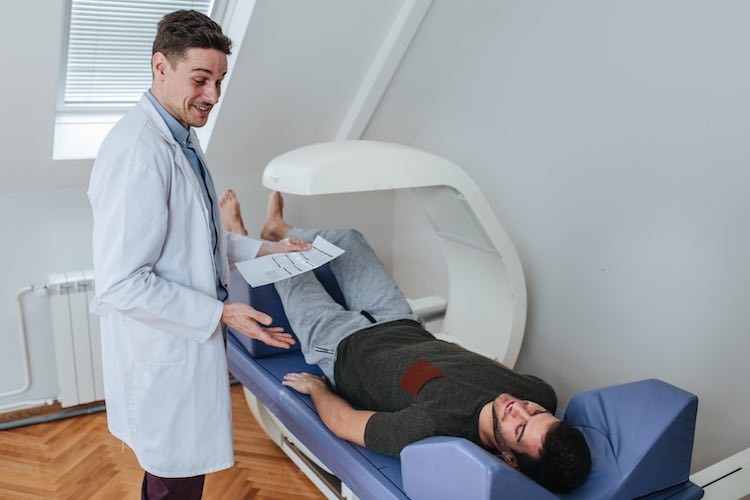
A bone density exam is quick and straightforward. It does not require any special preparation. You’ll lie on a padded table while a scanning arm passes slowly over your body. The most common areas tested are the hip, spine, and sometimes the forearm.
Before your scan:
- Avoid calcium supplements 24 hours before the test.
- Wear loose, metal-free clothing.
- Inform your doctor if you’ve had any recent imaging using contrast material.
During the scan:
- You lie still while the DXA machine sends low-dose X-rays through your bones.
- The machine calculates how much radiation passes through the bone, giving a measurement of bone density.
- The entire process usually takes 10 to 30 minutes.
Understanding your BMD bone values
Once the test is done, you’ll receive your T-score and Z-score, which help interpret your bone health.
- T-score: Compares your bone density with that of a healthy young adult.
- Normal: above -1
- Osteopenia (mild bone loss): between -1 and -2.5
- Osteoporosis: below -2.5
- Normal: above -1
- Z-score: Compares your bone density with others of your age, sex, and size.
Lower scores indicate a higher risk of fractures. Doctors use these results to evaluate how serious your loss of bone density is and plan suitable treatment or preventive steps.
What happens if the scan shows low bone density (what to do next)
If your bone density scan shows reduced strength, it’s not a reason to panic. Early detection allows you to act before serious damage occurs.
You can strengthen your bones through:
- Exercise: Weight-bearing workouts such as walking, jogging, or light strength training.
- Nutrition: A diet rich in calcium, vitamin D, and protein.
- Lifestyle habits: Avoid smoking and limit alcohol consumption.
- Medication: Doctors may prescribe bisphosphonates or other drugs to slow bone loss and improve density.
Following a balanced lifestyle and periodic monitoring can prevent fractures and help maintain bone health.
How often should you repeat a bone density scan
Experts suggest repeating a BMD test every 2 years for those at higher risk, while low-risk individuals may wait 3 to 5 years. If your bone density is normal, retesting every 5 to 10 years may be enough.
You may need an earlier scan if:
- You start or stop bone-related medication.
- You suffer a new fracture.
- You have significant health or hormonal changes.
The timing should always be personalized based on your doctor’s recommendation.
Where you can get scanned in Dubai
In Dubai, bone density scans are available at hospitals, diagnostic laboratories, and specialized imaging centers. Most of these facilities use advanced DXA scanners that provide fast and accurate results. You can book a scan directly or through your physician’s referral.
Many clinics offer flexible appointment options and quick reporting, which makes testing convenient for working professionals and older adults.
Cost of BMD test in Dubai
The cost of a BMD test in Dubai varies depending on the facility and location. On average, it ranges between AED 200 and AED 600. The price may differ based on whether both the hip and spine are scanned or only one region.
Many diagnostic centers also include this test as part of special offers or health checkup packages that combine multiple screenings. It is always best to confirm the exact price and available discounts with the provider before booking your appointment.
Who should avoid or take special precautions
Although a bone density exam is very safe, certain conditions require caution. The scan uses a very low level of radiation, but some people should delay or avoid it.
Precautions to follow:
- Pregnant women should not take the test unless absolutely necessary.
- Avoid scanning if you’ve had contrast imaging within the last week.
- People with severe spinal deformities may get less accurate results.
- Peripheral devices like heel scanners are less precise than central DXA.
While the risks are minimal, always inform your doctor about your medical history before the test.
Your Bones Deserve Care Today, Not Tomorrow
Many people neglect bone health until a fracture occurs, but preventing problems is always easier than treating them. A BMD test offers a simple and dependable way to measure bone strength and identify early signs of osteoporosis or osteopenia before serious damage happens.
Book Your BMD Test in Dubai with Trusted Experts
Booking a BMD test in Dubai is easy through Amax healthcare. Our team helps you schedule your bone density scan at trusted and licensed medical centers that use advanced DXA technology for accurate results. We connect you with reliable healthcare providers who prioritize safety, precision, and comfort. With Amax, you get personalized assistance, transparent pricing, and convenient appointment options. Take the first step toward stronger bones ,book your BMD scan today through Amax.
FAQ
- What is the difference between a bone density scan and a bone density exam?
Both terms refer to the same test that measures bone mineral density using DXA technology. - At what age should I have my first BMD test?
Women above 65 and men above 70 should get tested, but earlier if risk factors exist. - How long does a bone density scan take and is it safe?
It takes about 15 to 30 minutes and uses minimal radiation, making it very safe. - What do my T-score and Z-score mean on a bone density test?
They compare your bone density with healthy adults and people of your age group to detect any bone loss. - If my BMD test shows low bone density, what should I do next?
Consult your doctor for a treatment plan that includes diet, exercise, and medication. - How often should I repeat a bone density scan if my first result was normal?
Every 3 to 5 years, depending on your risk level and medical advice. - Are there any risks or limitations with bone density scans?
Only minimal radiation exposure. Pregnant women should avoid it unless essential. - Can men get osteoporosis and do they need bone density testing?
Yes, men can develop osteoporosis, especially after 70 or with long-term steroid use. - Do insurance plans cover bone density scans?
Many health insurance providers in Dubai cover the test partially or fully. Check with your provider. - Are there newer technologies beyond DXA for measuring bone density?
Yes, newer methods like ultrasound and REMS are being studied, but DXA remains the gold standard.