

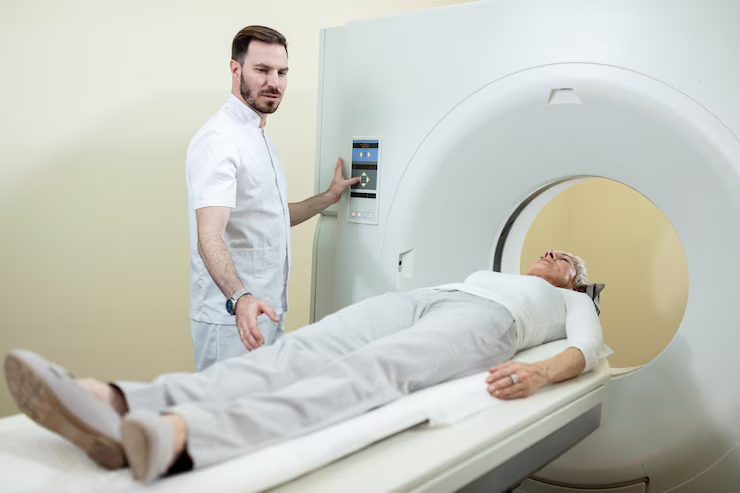
CT Angiogram Test: Importance, Insights and What You Need to Know
Chest pain or shortness of breath can be alarming. A CT angiogram provides a clear window into your blood vessels, helping doctors identify issues early. In this post we explain what a CT angiogram is, why it matters, who should consider it, how it works, and what to expect before and after the test. We also include guidance on safety, potential risks, and what to do next based on your results. By the end, you will feel informed and confident to discuss this test with your healthcare team.
What Exactly Is a CT Angiogram?
A CT angiogram (computed tomography angiography or CTA) is a noninvasive imaging test that uses X-rays and a contrast dye to visualize your blood vessels in three dimensions. It captures detailed images of blood flow and vessel structure without needing a catheter. Unlike traditional angiograms done in a cath lab, CTA only requires an intravenous line and a short time inside the scanner.
CTA is now a first choice for diagnosing coronary artery disease, aneurysms, pulmonary embolism, and vessel abnormalities. It offers precise images quickly and guides treatment decisions.
Who Should Get a CT Angiogram and Why
People are advised to get a CTA when they have symptoms or risk factors for vascular disease. Heart specialists recommend it for individuals with new chest pain, shortness of breath, or abnormal stress test results.
CTA can detect:
- Narrowed or blocked coronary arteries
- Aneurysms of the aorta or other major vessels
- Pulmonary embolism
- Blood flow issues in the legs, kidneys or neck
It helps clarify what treatment is needed, whether medications, stents or surgery are required.
When Is CT Angiogram Most Useful
When to Use CTA
CTA is ideal for:
- Patients with low to moderate coronary risk who need a clear view of their heart arteries
- Diagnosing serious vascular conditions such as pulmonary embolism or aortic dissection
- Replacing invasive catheter angiography in low-risk situations or when you only need imaging
International cardiac guidelines increasingly support CTA as the first step in many chest pain evaluations.
How Is a CT Angiogram Performed?
Before the Test
You will be asked to avoid food for 4–8 hours and skip caffeine for 12 hours. Tell your provider about all medications, allergies or kidney issues. They may give you a beta blocker to slow your heart and a slight dose of nitroglycerin to open your arteries.
During the Scan
You lie on a couch that enters the scanner. A nurse places an IV and connects ECG leads. The infusion of contrast dye shows the blood vessels. You will hear the machine and be asked to hold your breath briefly—usually less than ten seconds.
After the Scan
Once images are taken—usually in 5–15 seconds—you can return to normal activities right away. It takes 20–30 minutes total, sometimes up to an hour with preparation. Drink plenty of fluids to flush the contrast dye from your system.
Benefits and Limitations of CT Angiogram
Benefits
- Noninvasive; completely avoids catheter insertion—which reduces risk and recovery time
- Fast image capture with high resolution for major vessels including coronary arteries
- High diagnostic value even for incidental findings outside the heart—like lung nodules
Limitations
- It exposes you to radiation (1–12 mSv). Modern scanners use low dose protocols
- Contrast dye can affect kidneys or cause allergic reactions in rare cases
- CTA is diagnostic only. If a blockage is found, you need catheter angiography for treatment
CT Angiogram Cost in Dubai
When considering a CT angiogram, cost is an important factor—especially in a private healthcare system. In Dubai, the price for a CT angiogram typically starts from AED 1,500. The exact amount depends on the type of scan performed and the location of the imaging center. For example, a CT Coronary Angiogram costs around AED 2,450 in Dubai and AED 2,250 in Sharjah, while a CT Pulmonary Angiogram (CTPA) is more affordable, starting at AED 1,500 in both cities.
You can book your scan through Amax Healthcare, which connects you to top imaging centers and hospitals across Dubai and Sharjah, ensuring accurate diagnostics and professional care.
What Are the Risks?
Radiation Safety
Results show radiation doses can be as low or lower than with invasive angiography—though lifelong exposure risk is still a factor.
Contrast Risks
Up to 0.1% of patients experience mild reactions; severe reactions like anaphylaxis are very rare. Pre-medication helps reduce risk. For kidney patients, hydration protocols are used.
Other Risks
- Dye can leak into IV site but is usually minor
- Too-slow heart rate medications can affect breathing, so inform your doctor if you have asthma or COPD
What Happens After the Test
A radiologist or cardiologist reviews your scan. They assess:
- Artery blockages
- Aneurysms or vessel tears
- Pulmonary or abdominal vessel issues
Results guide the next steps:
- Medical therapy such as statins or blood pressure control
- Referral for catheter angiography or stenting if a blockage is found
- Planned surgery for aneurysm or dissection
Doctors also discuss lifestyle changes like diet, exercise and smoking cessation.
How Travel Nurses and Technologists Support You
Expert Assistance Before, During and After CTA
Travel nurses and cardiovascular technologists play a key role in improving your experience:
- Preparation support: reviewing medical history, adjusting medications
- During scan: setting up IV lines, administering beta blockers, monitoring vitals
- Patient education: explaining procedure and answering questions to reduce anxiety
- Immediate response: trained to handle allergic reactions or other urgent events
They help ensure your scan runs smoothly and safely.
Frequently Asked Questions
- How long does a CT angiogram take?
From preparation to finish it takes about 30 to 60 minutes. The scan itself lasts less than 15 seconds. - Is CT angiogram safe if I have kidney problems?
If your kidney function is normal, risks are low. Those with chronic kidney disease need special protocols and hydration. - Can you have CTA during pregnancy?
Doctors prefer to avoid it to protect the fetus from radiation. Alternatives are used unless clinically necessary. - How does CTA differ from catheter angiogram?
CTA is noninvasive and for diagnosis only. Catheter angiogram is invasive and allows immediate intervention if needed. - Will insurance cover it?
Most insurers approve CTA for patients with chest pain or suspected artery disease. Check your policy benefits and physician referral rules. - Can CTA detect early heart disease?
Yes, CTA can reveal plaque buildup before symptoms appear, helping guide early treatment. - Are there alternatives without radiation?
MRI angiography avoids radiation but is less available and slower. It is used when CTA or catheter use are not suitable.
Making Informed Choices Starts Here
A CT angiogram is a powerful test that helps doctors see your blood vessels clearly. It is quick, noninvasive, and essential for deciding the best care for your heart and blood vessels. As always, share your full health story, ask all your questions upfront, and follow all instructions before and after the scan. With proper preparation and support from professionals, your CTA can be smooth and informative. A well-done CT angiogram equips you and your doctor with real answers so you can take better care of your heart and your future wellbeing.
Why Choose Amax Healthcare for Your CT Angiogram in Dubai or Sharjah
Amax Healthcare makes your diagnostic journey simple, accurate, and stress-free. We help you access trusted radiology centers across Dubai and Sharjah for your CT angiogram—at transparent prices with zero hassle. From preparation to post-scan guidance, our dedicated care team ensures you feel supported every step of the way. Book your CT angiogram today with Amax Healthcare and take a confident step toward better heart health.