

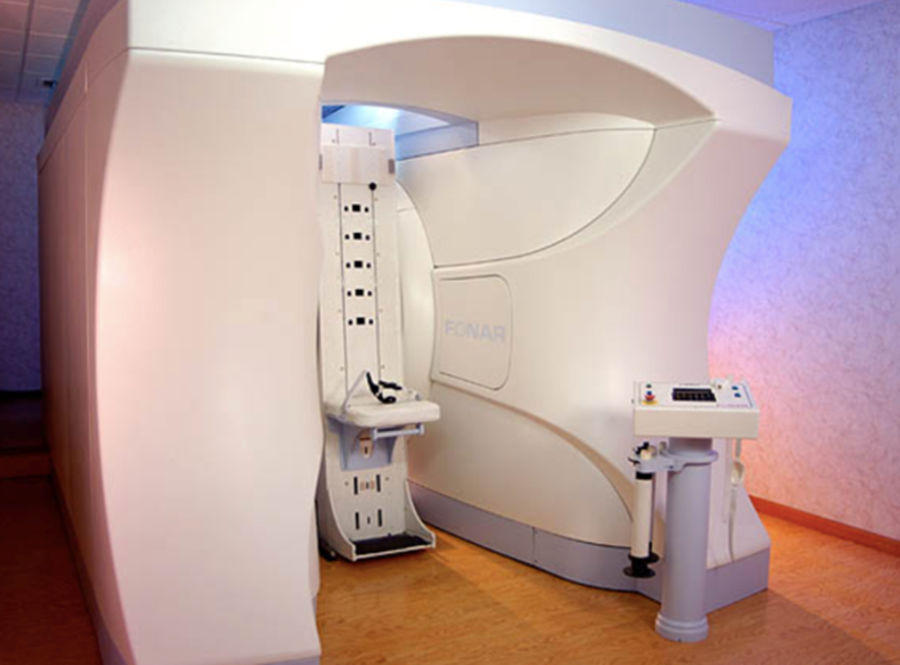
Open Upright MRI: A More Comfortable Alternative for Spine, Brain, and Neck Scans
Feeling anxious about MRI scans or struggling inside a narrow machine? Open upright MRI offers a more comfortable option by allowing you to sit or stand during the scan. This helps reduce stress and gives more natural imaging for certain conditions. It is widely used for spine, brain, and neck evaluations. Read on to know how open upright MRI works and why many patients prefer it over traditional scans.
What Is Open Upright MRI
Open upright MRI is a type of magnetic resonance imaging where the patient does not need to lie flat inside a closed tunnel. Instead, the scan is done while sitting or standing in a more natural position.This scanning method is often called sitting MRI or standup MRI, and it allows doctors to see how the body behaves under normal conditions, especially for spine and neck issues.
Features of Open Upright MRI
- Allows sitting or standing scan positions
- Uses an open design instead of a tunnel
- Captures images in natural posture
- Helps detect position related problems
- Suitable for patients with mobility issues
How It Works
- The machine uses magnetic fields like a regular MRI
- Images are taken while the body is upright
- Position changes can show hidden conditions
- The scan focuses on functional alignment
- It is useful for dynamic body evaluation
Why Open Upright MRI Feels More Comfortable Than Traditional MRI
Open upright MRI is designed to reduce the fear and discomfort many people feel during a traditional MRI. The open structure and flexible positioning create a more relaxed experience.Patients who feel anxious in closed spaces often find this method easier, as it removes the enclosed tunnel feeling and allows a more natural posture.
Upright MRI offers greater comfort for many patients, particularly those with claustrophobia or mobility concerns. Explore Upright MRI Scan: Cost, Benefits, and How It Works for a detailed overview.
Comfort Advantages of Upright MRI
- No closed tunnel feeling during the scan
- Less anxiety for claustrophobic patients
- Easier breathing and relaxation
- Better for elderly and children
- Suitable for patients with pain while lying
Real Patient Benefits
- Patients can stay calm during the procedure
- Reduced need for sedation in many cases
- More control over body position
- Improved comfort for long scan durations
- Better cooperation during imaging
Best Use Cases for Spine, Brain, and Neck Imaging
Open upright MRI is especially useful when body position affects symptoms. It helps doctors identify issues that may not appear when lying down.This method is commonly used for spine, neck, and brain imaging where natural posture plays a key role in diagnosis.
Spine Conditions That Benefit from Upright MRI
Upright MRI helps detect spine conditions that change under body weight, such as disc bulge or spinal instability. It shows how the spine behaves during standing or sitting, which helps doctors identify posture related pain that may not appear in standard lying scans.
Upright MRI is particularly beneficial for evaluating various spine conditions under natural weight-bearing conditions. To learn more about spinal imaging, read Spine MRI: Procedure, Cost, and What to Expect.
Neck and Cervical Spine Imaging
Sitting MRI allows detailed evaluation of the cervical spine in a natural position, helping detect nerve compression, alignment issues, and posture related discomfort. It is useful for patients with chronic neck pain that worsens while sitting or performing daily activities.
MRI is one of the most effective imaging techniques for evaluating neck pain, cervical spine disorders, and nerve compression. Learn more in MRI for Lower Back & Neck Pain: Diagnostic Solutions for Common Health Issues.
Brain Imaging in Upright Position
Upright MRI can support brain imaging by showing how posture affects certain conditions, including fluid flow changes and pressure related symptoms. It is useful in specific cases where symptoms appear during sitting or standing rather than lying flat.
Upright brain MRI can provide valuable insights into conditions affecting balance and neurological function, particularly when symptoms occur in weight-bearing positions. Learn more in Brain and Cervical Spine MRI for Balance Issues and Vertigo.
Upright MRI vs Seated MRI vs Standard MRI
Many people get confused between upright MRI, sitting MRI, and standard MRI. These terms are closely related but have practical differences.Knowing how each type works helps patients choose the right scan based on their comfort and medical needs.
Upright MRI vs Sitting MRI vs Standard MRI
Upright MRI and sitting MRI are increasingly preferred by many patients because they offer a more open and comfortable scanning experience compared to standard MRI. These advanced MRI systems allow imaging in natural body positions, which can be particularly useful when symptoms occur while sitting, standing, or under body weight. Standard MRI remains the most widely available option and provides excellent image quality for a wide range of diagnostic needs.
If you’re considering a sitting MRI, understanding how it differs in terms of safety, comfort, and diagnostic accuracy can help you make an informed choice. Learn more in Sitting MRI Scan: Everything About Safety, Comfort and Accuracy.
| Feature | Upright MRI | Sitting MRI | Standard MRI |
|---|---|---|---|
| Patient Comfort | Open design with more freedom of movement | Comfortable seated position with open surroundings | Requires lying still inside a tunnel like scanner |
| Patient Position | Standing, sitting, bending, or weight bearing positions | Sitting position only | Lying flat throughout the scan |
| Claustrophobia Friendly | Highly suitable for claustrophobic patients | Generally well tolerated by claustrophobic patients | May be challenging for some patients |
| Posture Related Evaluation | Assesses the body in natural weight bearing positions | Evaluates conditions while seated | Assesses the body only in a lying position |
| Diagnostic Applications | Useful for spinal instability, disc issues, and posture related pain | Helpful for neck and back problems associated with sitting | Suitable for most routine and specialized MRI examinations |
| Positioning Flexibility | Multiple scanning positions available | Limited to seated imaging | Fixed supine position |
| Availability | Available in selected imaging centers | Less commonly available | Widely available in hospitals and diagnostic centers |
When Standard MRI Is Still Used
Standard MRI is still preferred for certain conditions where high detail imaging is required, especially for internal structures that do not depend on body position. It remains a common choice when posture does not influence the symptoms being investigated.
Who Should Consider Open Upright MRI
Open upright MRI is not just for comfort, it is also helpful for specific patient groups who may face difficulty with traditional MRI scans.It provides a practical solution for people who need flexibility during imaging or who cannot tolerate standard scanning conditions.
Ideal Candidates for Upright MRI
Open upright MRI is suitable for patients with claustrophobia, chronic back or neck pain, or those who cannot lie flat comfortably. It is also helpful for elderly individuals and patients who require posture based imaging for accurate diagnosis.
Situations Where It Helps Most
This scan is useful when symptoms increase while sitting or standing, or when standard MRI fails to detect the issue. It is also helpful for patients who struggle to remain still in a lying position for long periods.
What Happens During an Upright MRI Scan
Knowing what to expect during an upright MRI scan can reduce fear and help patients feel more prepared. The process is simple and similar to a standard MRI, but with more flexible positioning.
Patients are guided throughout the procedure, and the open design makes communication easier during the scan.
Steps in the Upright MRI Process
- Patient is positioned sitting or standing
- Technician adjusts machine for comfort
- Instructions are given before scan begins
- Images are captured in selected positions
- Scan may include multiple posture changes
During the Scan Experience
- The machine makes mild tapping sounds
- Patient needs to remain still briefly
- Scan duration depends on area examined
- Communication is possible throughout
- No pain is involved in the process
Is Open Upright MRI Safe and Accurate
Open upright MRI uses the same basic technology as traditional MRI, making it a safe and reliable imaging method. It does not involve radiation and is widely used for diagnostic purposes.While it offers advantages for certain conditions, its effectiveness depends on the type of issue being examined.
Safety and Accuracy Points
- Uses magnetic fields without radiation exposure
- Considered safe for repeated imaging
- Provides accurate results for posture related issues
- Helps detect conditions missed in lying scans
- Requires expert interpretation for best results
Limitations to Consider
- May have slightly lower detail in some cases
- Not always suitable for all body areas
- Availability may be limited in some regions
- Scan time may vary based on position
- Best used when clinically recommended
FAQs
What is the difference between open upright MRI and open MRI
Open upright MRI allows scanning in sitting or standing positions, while open MRI mainly refers to a wider design without posture based imaging capability, making upright MRI more suitable for position dependent conditions.
Can I sit during an MRI scan
Yes, sitting MRI is possible with open upright MRI machines, allowing scans in a natural position. This helps improve comfort and also supports better diagnosis for conditions influenced by posture.
Is upright MRI better for back pain
Upright MRI can be more useful for back pain because it shows how the spine behaves under body weight. This helps identify issues that may not appear when lying flat during a standard scan.
Is open upright MRI suitable for claustrophobic patients
Yes, the open design reduces the feeling of being enclosed, which makes it a suitable option for people who experience anxiety or discomfort inside traditional MRI machines.
How long does a sitting MRI scan take
A sitting MRI scan usually takes between twenty to forty five minutes depending on the body area and number of images required, with some cases needing additional positioning for better results.
Are upright MRI scans as accurate as regular MRI
Upright MRI is accurate for posture related conditions, while standard MRI may still be preferred for detailed imaging of certain internal structures depending on the clinical requirement.
A Practical and Patient Friendly MRI Option
Open upright MRI has changed the way imaging is done by focusing on both comfort and real world body positioning. It helps patients who struggle with traditional MRI while also improving diagnosis for posture related conditions. From spine and neck issues to specific brain evaluations, this method offers a more natural and less stressful scanning experience. Choosing the right type of MRI depends on the condition, but upright MRI clearly provides a valuable alternative.
Safe and Affordable Open Upright MRI in Dubai
Amax provides advanced open upright MRI services by connecting you with trusted diagnostic centers and experienced radiologists for safe and accurate imaging. The service is designed to offer comfort focused scanning with reliable results for spine, brain, and neck conditions. With experienced support, accessible pricing, and patient friendly care, Amax ensures a smooth and affordable diagnostic experience without compromising on quality.